


Volume 242: Camp Stoves Produce Carbon Monoxide. Can You Still Use Yours In Your Tent?
Over the years, I have tried many different kinds of backpacking stoves. Origionally, in my youth, I would start a small fire and cook over the open flame. This method was dangerous and destroyed many camp dishes. I then moved on to the liquid fuel stove in the fashion of the MSR Whisperlite International. A great stove, especially in the winter, but also large, bulky and very smokey, not to mention the fuel is heavy and difficult to carry. I then found my way to stick stoves, but you have to continuously refuel them and they are only feasible when dry fuel is available. It was very apparent that these stoves could not be used in your tent. The smoke and flame would damage your tent and do you harm. But then came the cannister stoves: small, simple and easy to use fuel packaged in a light and handy little cannister. I have had more than five various styles of cannister stoves and they all work amazingly. However, they are very deceptive as they seem to burn clean with a very controlled flame. Things are not as they seem!
A new study compared three popular camp stoves—and found that one produced much more carbon monoxide than the others. |
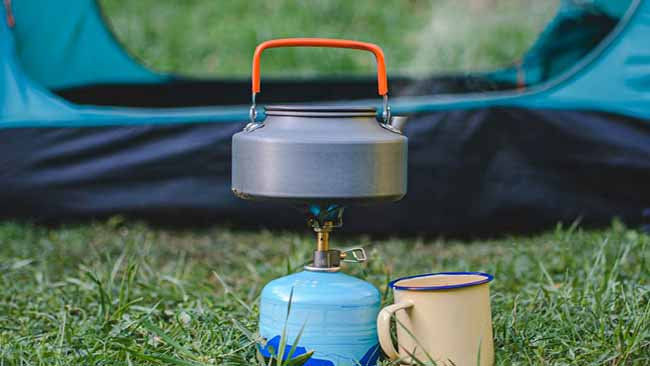
Picture this: You’ve just pitched your tent at the end of a long hike, and you’re ready for a hot meal. But just as you get ready to start cooking, you hear the wind driving cold rain across the thin walls of your tent. You feel your heart sink. You could wiggle into your wet rain shell and brave the elements—or you could just start cooking right here, right now, inside your tent. We’ve all been tempted—but how dangerous is it really? |
Combustion 101 |
The use of combustible fuels for cooking has been a mainstay of food preparation for thousands of years. In the old days, explorers used sticks and logs. Today, your fuel source is more likely a canister of isobutane blended with propane. But whether you use pressurized gas or firewood, the basics of combustion remain the same.
Combustion is a chemical process that produces both carbon dioxide (CO2) and carbon monoxide (CO). Breathing in too much CO2 isn’t great for your health. But CO is a known killer. |
Why is carbon monoxide so dangerous? |
Cases of campers experiencing carbon monoxide poisoning inside of tents have been reported for decades, with numerous fatalities. The toxicity of CO is related to its incredible ability to bind to hemoglobin, the molecule in our red blood cells that’s responsible for transporting oxygen. In fact, CO binds to hemoglobin about 250 times better than oxygen does. So, when we breathe it in, it latches onto our red blood cells, crowding out oxygen molecules until our tissues and cells effectively suffocate.
Compounding the danger, carbon monoxide is odorless and tasteless. That makes it extremely hard to detect—especially since tents aren’t typically equipped with CO detectors.
While researchers have been collecting data on the dangers of various fuels—such as unleaded gasoline, kerosene, and white gas for more than 20 years, modern isobutane/propane canisters haven’t been studied until much more recently. |
Which camp stove produces the most carbon monoxide? |
A few years ago, Dr. Jeff Thurman, an emergency physician based in Louisville, KY, decided to collaborate with medical and Fire-EMS colleagues to address the lack of data. Together, they designed an experiment to measure the carbon monoxide output of three popular stoves: the Primus Power Trail, Jetboil MightyMo, and MSR PocketRocket 2.
For the experiment, Thurman and his colleagues let each stove burn at max power for 15 minutes within a closed, three-season tent. Every 60 seconds, they measured the concentration of carbon monoxide within the tent.
The verdict? All three stoves produced CO—albeit not at the same rate. Researchers discovered that there was a significantly higher carbon monoxide output from the Primus Power Trail in comparison to the Jetboil MightyMo and MSR Pocket Rocket 2. Here are the maximum in-tent concentrations of CO for each stove, measured in parts per million.
Primus Power Trail: 207 ppmJetboil MightyMo: 105 ppmMSR PocketRocket 2: 67 ppm
With all three, the concentration of CO within the tent increased rapidly for the first five to six minutes. After that, the concentration inevitably plateaued. The plateau was thought to occur when the rate of carbon monoxide production became equal to the rate of its diffusion through the fabric of the tent. |

Why do some stoves produce more carbon monoxide than others? |
So, why did the Primus Power Trail produce so much more carbon monoxide than the other two stoves?
The researchers concluded the differences were likely due to power level: the Primus Power Trail has a power output that is 35 percent greater than the Jetboil MightMo and 65 percent greater than the MSR PocketRocket 2. The team surmised that the faster rate of fuel consumption produced greater levels of CO.
That said, the exact concentrations of CO produced in this experiment might vary from what you’d experience in your own tent. In the real world, you’d likely see variations in CO levels depending on the type of fabric your tent is made of, the size of your tent, and where you’re sitting in the tent (e.g., near the stove versus beside an open tent flap).
“For the ease of the study, we had the tent set up in a fairly controlled environment,” Thurman said. “But in the real world you would have more cross breeze and ventilation, which might change the carbon monoxide levels.” |
IS it safe to use your stove inside your tent? |
So now we know that isobutane/propane fuel produces carbon monoxide when combusted. That brings us to the next question: Are these levels high enough to actually cause harm?
According to the Occupational Safety and Health Administration (OSHA), 100 ppm is the minimum threshold for maritime worker evacuation. Both the MightyMo and Power Trail exceeded that threshold. The MSR PocketRocket 2 did not.
Stove use inside a well-ventilated vestibule remains standard practice for many mountaineers and cold-weather backpackers. Stove use within the tent proper, however, should be approached with extreme caution.
While reports of carbon monoxide poisoning due to stove use inside of tents may be relatively rare, it does not mean the risk is zero. Avoid prolonged simmering, maximize tent ventilation, and make regular trips outside the tent. Also be mindful that there’s higher risk of carbon monoxide poisoning in a tent in zero-wind conditions.
Keep an eye out for symptoms whenever you use your stove within an enclosed area. According to the CDC, common signs of carbon monoxide poisoning include “flu-like” symptoms such as “headache, dizziness, weakness, upset stomach, vomiting, chest pain, and confusion.”
“If you notice symptoms, the first thing to do is remove yourself from that environment,” Thurman said. “If you’re in a tent, the easiest thing to do is get outside to fresh air.” |
NAC NOTE: Although this article talks of cooking in your tent, this is typically only done in moutaineering situations high above the tree line with thick snow coverage. While backpacking in bear country or anywhere there is wildlife, it is highly recommended that you never cook in your tent. Cooking and eating should be done at least 50 meters from your tent whenever possible. |
Written by Dan Hu for Backpacker Magazine Online, published July 9, 2024N.A.C. NEWS
(Sunday, July 6, 2025)
Good Morning, |
 Welcome to the hot month of July. To escape the heat we will be leaving next weekend for a kayaking excursion around Franklin Island in the District of Perry Sound. The cool waters of the Georgian Bay will keep the heat at bay as we spend three days and two nights circumnavigating and camping on the Island. The Dark Sky Preserve will offer incredible night skies for star gazing, and the pristine waters of the Georgian Bay and all the small Islands and inlets will make for some very interesting paddling. Tune into NAC's Facebook page for the photos when we return!
Be sure to visit the NAC Events Page as we have added seven new events over the next three months. Day hikes along the Bruce Trail, climbing events at Climber's Rock and a backpacking trip on the Peninsula will fill the next few months with a plethora of adventures for those of all skill levels.
Our Cape Croker Multiday Hike is fast approaching and space is filling up fast! Eleven out of fifteen spots are already taken. With the deadline of July 26th fast approaching, you'll want to reserve one of the four remaining spots very quickly. This three day journey will take us along the Bruce Trail at the base of the Bruce Peninsula along some of the most picturesque views available on the trail. Our nights will be spent camping in luxurious camp sites with all the amenities including hot showers, running water, and flushing toilets. This is the perfect backpacking trip for those that enjoy the beauty of backpacking but still like to have the comforts of home. Reserve your spot now!
NAC's partnership with Climber's Rock has been renewed and some new systems have been put in place to make our visits even smoother. All first time visitors who join an NAC event at Climber's Rock will receive a free guest pass for the evening, and those that require a lesson will be able to obtain a lesson from NAC's best instructor. Discounted day passes will still be available to all Adventure Pass holders. With Climber's Rock new software and user portal, the purchase of passes is even easier! |
That's all the news for this week. As always, stay safe, and happy adventuring!
Lenny Burch
|


Comments